

Hi Hartsel, I’m David Martinez, reporting on key developments across the U.S. that matter to our national landscape—from the courtroom to the classroom.
Supreme Court Pushback on Trump’s Agenda
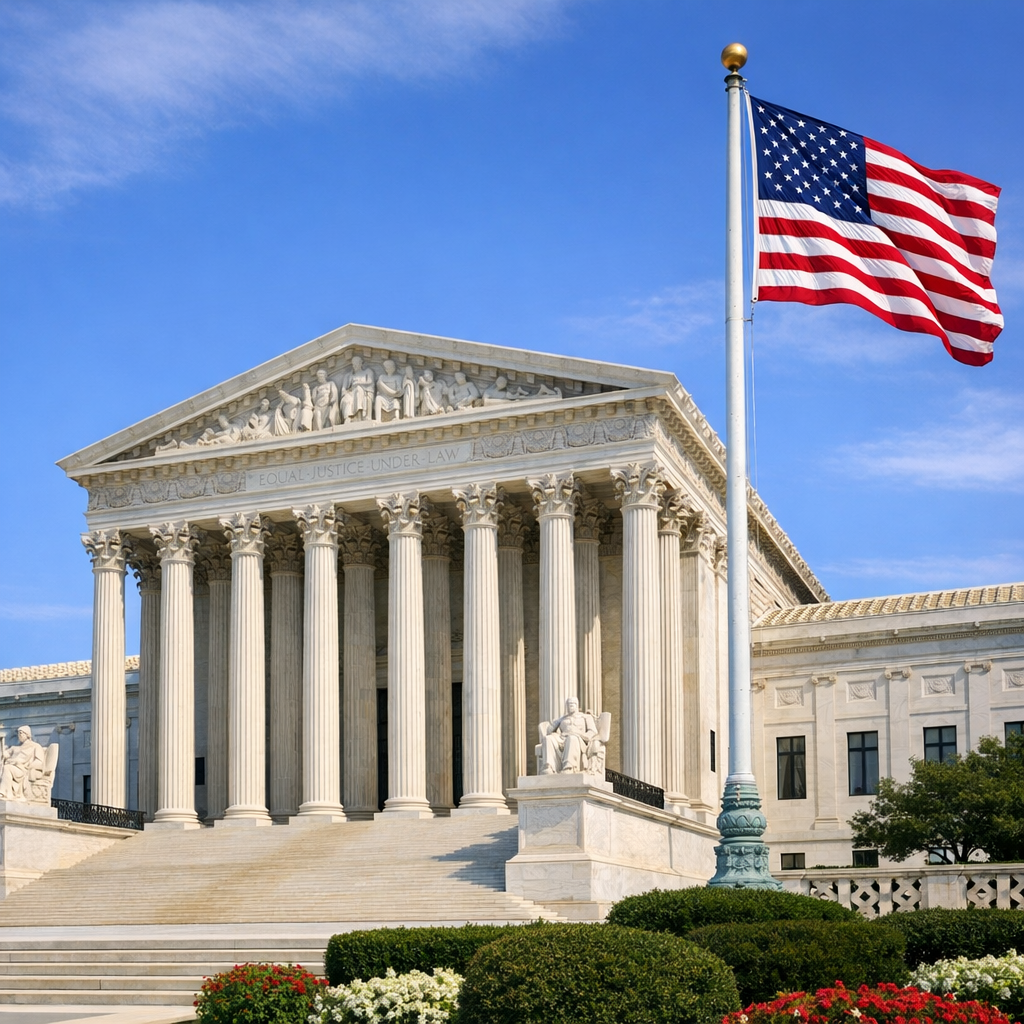
This year the Supreme Court struck down several signature policies of President Trump’s administration. A high-profile executive order that attempted to end automatic citizenship for children born in the U.S.—known as birthright citizenship—was ruled unconstitutional. Similarly, a plan to limit how and when a president can dismiss a Federal Reserve governor was rejected, reinforcing the checks on executive power. The Court also reversed many wide-sweeping tariffs that had affected imports from multiple trading partners. These decisions preserve long-established constitutional norms involving immigration, agency authority, and trade. A broader conservative win came in rulings that support restrictions like limiting transgender athletes’ participation in women’s sports, and a ruling that allows states to redraw voting maps in ways that could reduce the influence of minority voters.
Midterm Mood: Battles Ahead for Senate, Ballots & Maps
With the midterm elections approaching this fall, Republicans who once assumed safe Senate control are now facing stiff challenges. A mix of faltering approval ratings for the president and frustrations over economic uncertainty are giving Democrats more opportunities in states previously thought off-limits.
An important case in Missouri illustrates how election law is in flux: the state’s Supreme Court blocked a new congressional map backed by Trump and ordered that voters decide whether to keep or reject it. Until then, the existing district map from 2020 remains in effect.
Also in the spotlight: a federal judge has blocked an executive order aimed at reducing mail-in voting. That order had drawn serious concerns for its potential effect on voter access and participation.
Education & Public Trust: Satisfaction Declines
Americans’ satisfaction with K-12 education is now at a low point. Major concerns revolve around whether schools are preparing kids for college, future jobs, and whether there’s fairness and quality across the board. The drop is steepest among Democrats, though dissatisfaction stretches across party lines.
What This Means for Us
- Federal checks still work. Despite ambitious executive action, the judicial branch continues to limit federal overreach in areas like citizenship, trade, and agency leadership.
- Democracy is still under contention. How states draw voting districts, who gets to vote, and how ballots are cast are being litigated and decided, with real consequences for representation.
- Schools are under fire. With declining satisfaction in public education, pressure is growing for reform—be it curriculum, funding, teacher quality, or equity.
As these stories unfold, what happens in Washington affects all of us, right in Hartsel. Voting rights, economic policy, and education aren’t distant concerns—they’ll shape life here in Colorado, too. I’ll keep tracking this beat so you stay informed.